
Partners · Data and dMRV
Monetise your data by certifying water impacts.
Your historical records, context data and operational monitoring build the baseline and project scenarios. Connected to NEXUS through an API, they become certification evidence, and a new source of revenue.
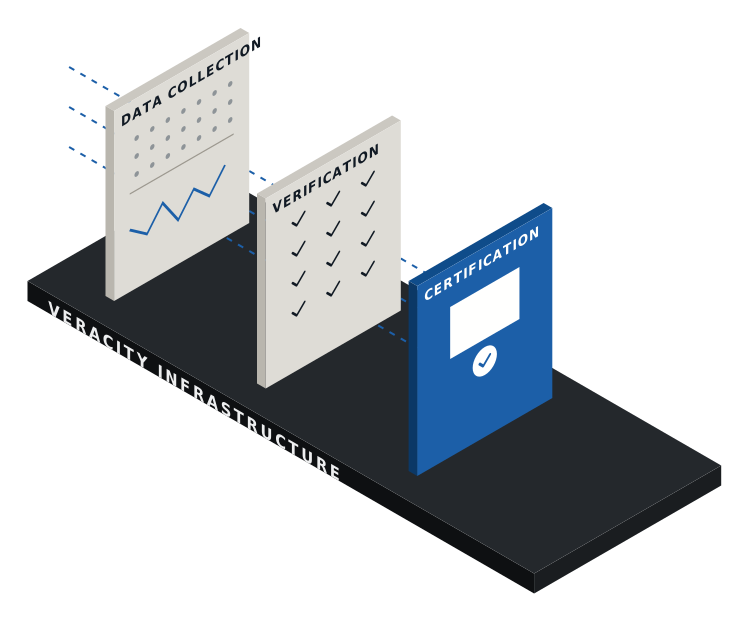
02What your data brings
Context and history ground the baseline scenario.
An impact is measured against a baseline scenario. Hydrological and climate history, imagery and context data establish what would have happened without the project. Operational monitoring from dMRV platforms measures what happens with it. The gap becomes the certified impact.
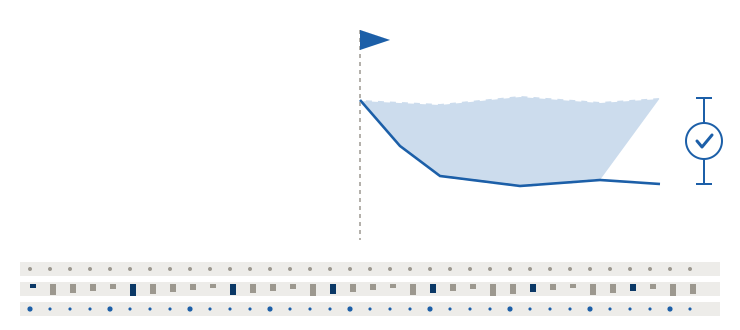
03Evidence collection
Top-tier evidence, more certified volume.
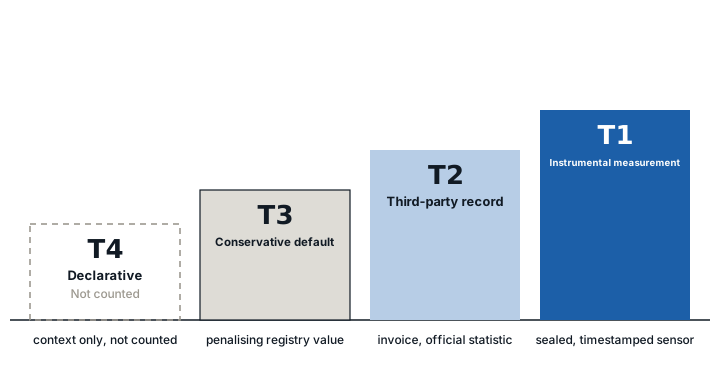
NEXUS ranks every data point from T1 to T4. An instrumental reading or one from an independent third party ranks first; otherwise, the protocol applies a conservative value that lowers the certified volume. Your data earns your clients volume.
04Monetisation
Monetise your data through the API.
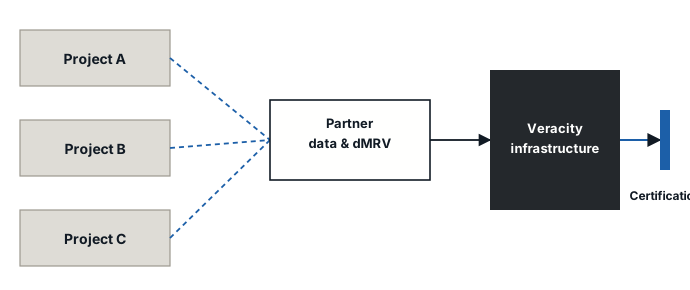
Your data enters NEXUS through an API and connectors, with no re-entry. Every data point used in a certification keeps its source, from the reading to the certificate: your contribution is identifiable, so it can be paid for. Terms are set with each partner.

05Distribution channel
Your clients already run projects.
Utilities, manufacturers, farms: your clients run leak reduction, reuse or irrigation projects. You bring them to certification with data already in place, and your role appears on the project record.
06Connected
A standard connection, not a custom build.
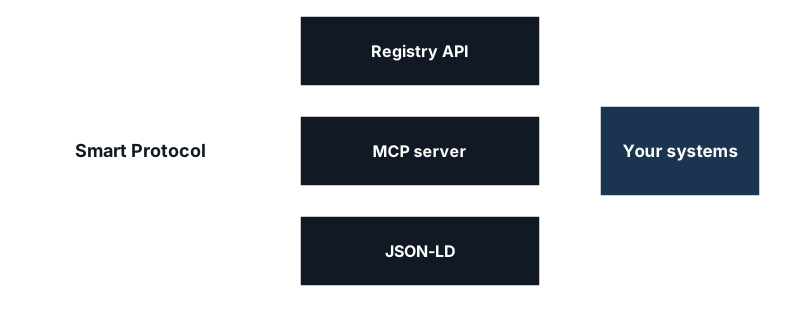
The Smart Protocol states exactly which data each protocol expects. The registry API shares a common object schema, the MCP server opens the documentation to AI agents, and encoding follows JSON-LD, SAREF4WATR and FIWARE.
07Get started
Put your data to work.
Data or dMRV provider: tell us what you measure and for which clients. We will study the integration with you.
+Questions
Which data are you interested in?
Hydrological and climate history, satellite imagery, water quality, meters, sensors and SCADA, and operational monitoring from dMRV platforms.
What is the difference between a data provider and a dMRV provider?
A data provider mainly brings the history and context of the baseline scenario. A dMRV provider monitors the project's operations and water resource, which feed the project scenario. Both are partners.
How is my data paid for?
Every data point used in a certification stays linked to its source. Terms are set with each partner, according to the data and its use.
Do I need to build a custom integration?
No. Data enters through the API and standard connectors (JSON-LD, SAREF4WATR, FIWARE); the Smart Protocol states what each protocol expects.
Can I bring my clients' projects?
Yes. You bring them to certification with the data already in place, and your role is recognised on the project record.