Skip to content

Public programs · States, regions, local authorities, water agenciesPublic programs

Build your territory's water credit mechanism.

Orchestrate collective action across your basin. Every credit stands on a verified cubic metre.Design, equip and certify your mechanism. Every credit stands on a verified cubic metre.
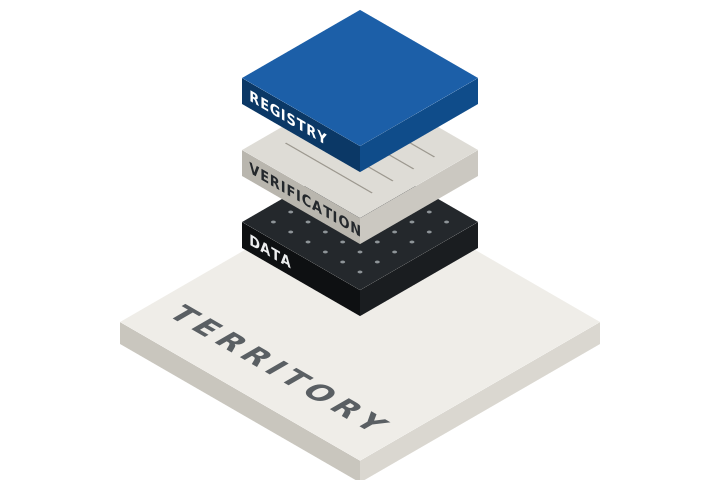
A territory and, above it, the three layers of its mechanism: data, verification, registry

02In short

A public mechanism is only as strong as its proof.

Water can fund local infrastructure, on one condition: every credit rests on a cubic metre that is measured, independently verified and counted once.Water can fund local infrastructure, if every credit holds up.

  • MeasuredEach credit comes from metered volumes, under a public protocol.Metered volumes, under a public protocol.
  • VerifiedAn accredited body checks and signs. The issuer never verifies.An accredited body signs, never the issuer.
  • Counted onceA time-stamped registry prevents any credit from being sold twice.A time-stamped registry stops double sales.

03Routes

Orchestrating collective action: three ways to work together.

01

Design the mechanism

For
Governments preparing a law, decree or programme
You get
Rules, methodologies and governance drafted with your teams, on Veracity's infrastructure.Rules and governance, on Veracity's infrastructure.
Discuss your mechanism
02

Operate Veracity's infrastructure in your basin

For
Programmes that need verification tools and a registry
You get
Smart Protocols, the Veracity agent and a time-stamped registry, connected to your systems.Verification tools and a registry, connected to your systems.
See the infrastructure
03

Certify within your programme

For
Programmes that accredit certification operators
You get
Protocols applied, data verified, an accredited body signing.Data verified, an accredited body signs.
Become partners

04What we bring

Everything a credible mechanism needs.

  • Rules and methodologiesEligibility, baselines, additionality and claims, written down and versioned.
  • Protocols per interventionOne method for each type of project your programme recognises.
  • Agent-led verificationThe Veracity agent tests every data point and prepares the evidence for review.
  • Registry and traceabilityEvery credit recorded once, time-stamped and anchored by a blockchain hash.
  • Verifier oversightApproval, assignment and supervision of accredited verification bodies.
  • Public indicatorsVolumes certified, active projects and reinvestment, published for citizens.

05How we work

From first diagnosis to public reporting.

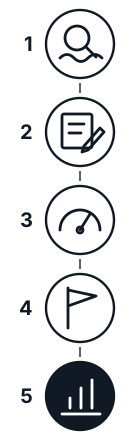
  1. 01DiagnoseBasin pressures, legal framework and the interventions worth valuing.Basin, legal framework, interventions.
  2. 02DesignRules, governance, protocols and the role of each actor.Rules, governance, protocols.
  3. 03PilotFirst projects measured and verified on real data.First projects verified.
  4. 04LaunchOperators accredited, registry open, first credits issued.Registry open, first credits.
  5. 05ReportPublic indicators and reinvestment tracked over time.Public indicators tracked.
Five steps one above the other: diagnose, design, pilot, launch, report

06Protocols

Protocols your programme can adopt.

Adopt these protocols or adapt them to the interventions you recognise.Adopt them or adapt them.

07Market signal

Public water credit mechanisms are starting.

In March 2026, the state of Ceará (Brazil) passed one of the first laws creating a public water credit system (Complementary Law 19,693/2026, State Decree 37,488/2026).In March 2026, Ceará (Brazil) created a public water credit system by law.
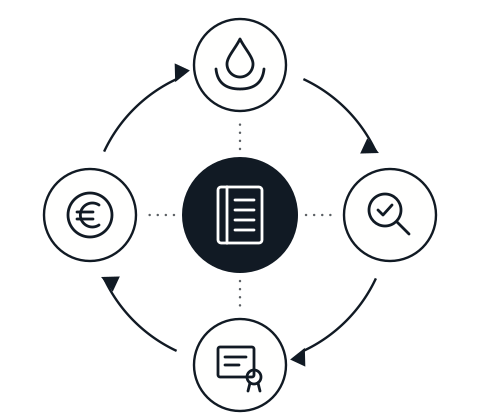
  1. Credits come from verified volumes: reuse, desalination, rainwater (excluding dams).Verified volumes, excluding dams.
  2. A credit only exists once an accredited operator has certified it.Certified by an accredited operator.
  3. By law, 30% of the revenue is reinvested in the state's water infrastructure.30% of revenue reinvested in water.
  4. A technical committee sets the rules; public indicators will track the results.Rules set by a technical committee.
A loop of four steps around the registry: a water preservation project, verification, credit, revenue, which flows back to the project

08Governance

Your rules. Your data.

Veracity supplies method, tools and independent proof, never the decisions.The mechanism stays yours.
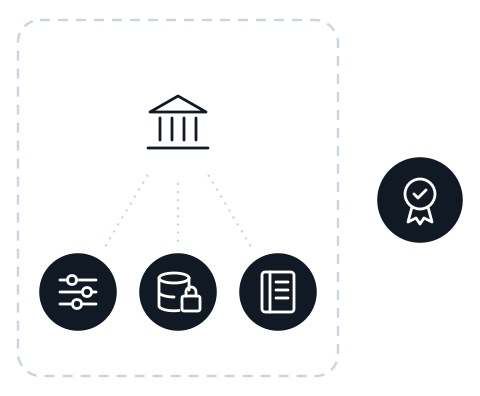
  1. You set the rules, the eligible interventions and the use of revenue.You set the rules.
  2. Data remains the property of your programme and its participants.Your data stays yours.
  3. Our registry connects to your own systems and public registers.Connected to your public registers.
  4. An accredited body signs; the issuer never verifies.Independent verification.
Inside a dotted perimeter, the public authority with its rules, its locked data and its registry; outside it, the verifier signs into the registry

09Get started

Tell us about your territory.

Tell us where you stand. The team replies within two working days.Reply within two working days.

+Questions

Does the mechanism cost the public budget anything?

It depends on the design. Many mechanisms are funded by the credits themselves; we size costs with you during the diagnosis.

Is it compatible with the Water Resilience Certificate?

Yes. Both rest on the same measurement and registry, so one cubic metre is never counted twice across systems.

Who owns the data?

Your programme and its participants. Veracity processes data to verify it, under the rules you set.

Can Veracity certify in a programme that already exists?

Yes, where the programme accredits certification operators. We apply its rules and an accredited body signs.

How long does a pilot take?

It depends on the interventions and the data already available. We agree a timeline after the diagnosis.