
CMC-ODSHFC protocol · draft for pilots
Certify the recovery of refrigerant gases, mainly in industrial cold.
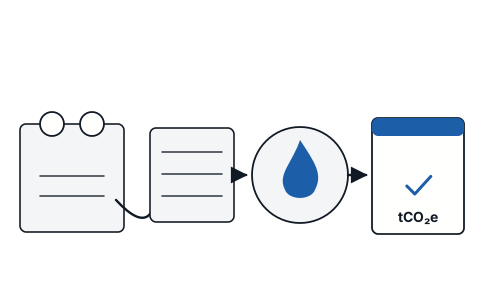
HFCs from refrigeration circuits are recovered, weighed and destroyed. Each destruction becomes a certificate.
02Situation
Industrial cold, where the largest potential lies.
Depending on the gas, one kilo of HFC is worth 1,530 to 14,600 kilos of CO₂ on carbon markets (100-year GWP, IPCC AR6).
 Industrial coldWarehouses, food processing, process plants: the largest pool.
 Residential coldRefrigerators and air conditioners at end of life.
03Who gains
What each party gains.
One destruction, certified once, serves each party.
 BuyersVerified avoided tonnes, bought one by one.
 ContributorsThe value of each tonne destroyed goes to whoever produced it.
 BeneficiariesThe organisation in whose name the certificate is retired.
 FacilitiesDestruction attested at entry and exit.
04Alignment
Credible by construction.
References that auditors, regulators and financers already know.
- Verification
- ISO/IEC 17029
- ISO 14064-3
- Carbon method
- ISO 14064-2
- Global warming potentials
Data reusable in:Company scope 3 decarbonisation · GHG Protocol · CDP Climate Change · ESRS E1 · ISO 14064-1
05What we certify
One tonne of refrigerant destroyed, one certificate.
The certificate carries the mechanism « emission avoidance », not a removal.
- Gas recovered from refrigeration circuits, weighed per site.
- Destruction in an eligible facility, attested.
- Conversion to tCO₂e by each HFC's warming potential.
- One certificate per verified event.
06How it works
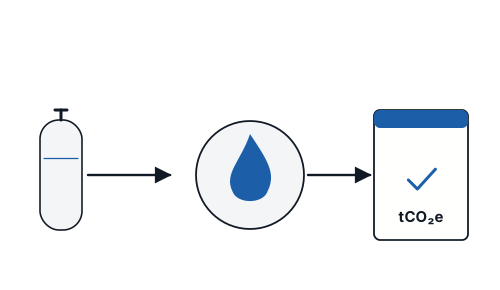
From stock to certificate.
The measurement plan is validated before the first destruction.
 01RecoverExtract the gas without release to air.
 02Weigh and traceMass and chain of custody, at every step.
 03DestroyIrreversible destruction in an eligible facility.
 04VerifyAn independent verifier checks. Veracity calculates, never validates.
07The measurement
Measuring what is recovered.
Each kilo recovered is weighed and proven by a document, not an estimate.
- Mass weighed at recovery, per unit or batch.
- Destruction certificate issued by the approved facility.
- Full chain of custody, from site to facility.

08Get started
Do you operate refrigeration plants?
Start with one circuit: weigh it, have it destroyed, have it certified.
+Questions
Why focus on refrigeration?
Because that is where the largest recoverable pool of high-GWP gas is: industrial circuits first, then residential.
Which gases are covered?
Mainly HFCs from refrigeration circuits and their commercial blends. The protocol also covers CFCs and HCFCs.
Is this a removal credit?
No. The certificate carries the mechanism « emission avoidance ». It does not remove CO₂ from the atmosphere.
What is an avoided tonne of CO₂ equivalent?
The weight of gas destroyed, multiplied by its global warming potential, compared with the scenario where it would have been released.
Who verifies the destruction?
An accredited body, independent of Veracity (ISO/IEC 17029). Veracity's agent calculates and prepares the evidence; it never validates.
Is the protocol final?
It is a draft version, ready to be used in pilots.
Where do the GWP values come from?
IPCC Sixth Assessment Report (AR6), 100-year GWP: HFC-134a at 1,530, HFC-23 at 14,600 times CO₂.